
Beekeeping knowledge
Practical knowledge for the work at the colony – from the first cleansing flight to the winter treatment in December.
Beekeeping knowledge
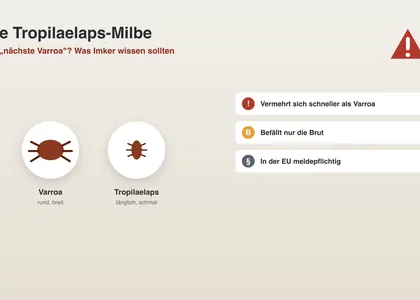
The Tropilaelaps mite: the next varroa?
No sooner have we halfway got the varroa mite under control than the next threat announces itself: the Tropilaelaps mite. It is considered potentiall…
Beekeeping knowledge
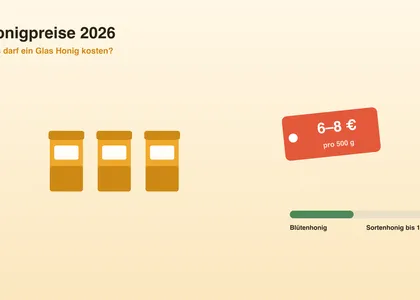
Honey prices 2026: what should a jar of honey cost?
What is a jar of your own honey worth? Many beekeepers sell too cheaply. We show the current market prices for 2026, why honey can hardly be produced…
Beekeeping knowledge
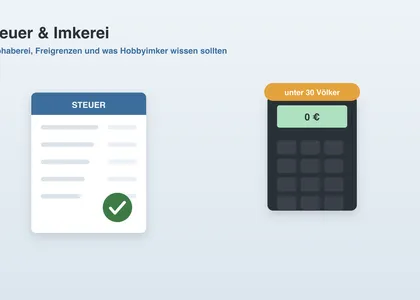
Beekeeping and tax: what hobby beekeepers should know
As soon as the first honey is sold, the question of tax comes up. The good news: for most hobby beekeepers this is relaxed. We explain the key rules …
Beekeeping knowledge
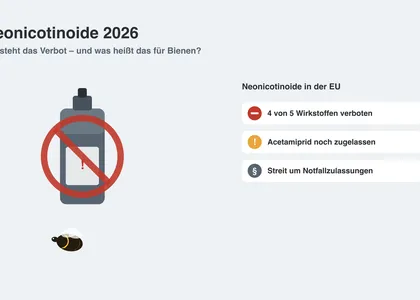
Neonicotinoids 2026: where does the ban stand — and what does it mean for bees?
Neonicotinoids are considered one of the main causes of insect decline. In the EU most are now banned — but the debate continues. We give a factual o…
Beekeeping knowledge
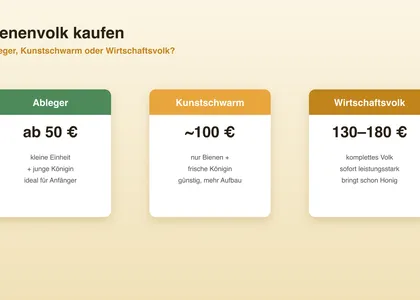
Buying bees: nucleus, package or full colony?
The path to your first own colony leads through an important decision: a nucleus, a package or straight away a complete full colony? We explain the d…
Beekeeping knowledge
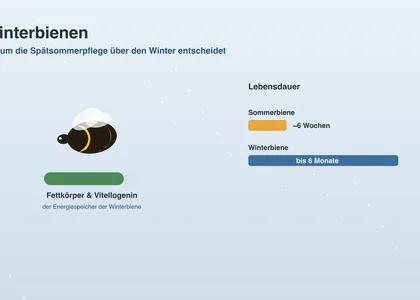
Winter bees: why late-summer care decides the winter
Winter bees are the real heroes of the bee year: they live months instead of weeks and carry the colony through the cold. Whether they grow up health…
Beekeeping knowledge
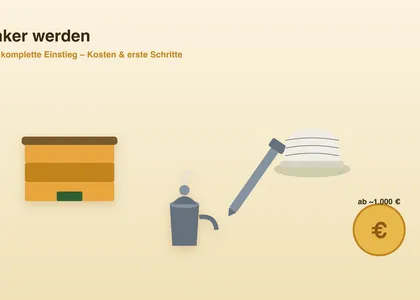
Becoming a beekeeper: the complete start with costs and first steps
You want to start beekeeping? A wonderful hobby — if you start right. We explain the first steps, roughly what the equipment costs, how much time bee…
Beekeeping knowledge
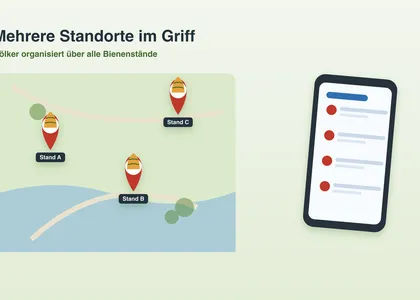
Managing bee colonies across multiple sites
Two colonies in the garden are quickly in view — but with several sites it gets confusing. We show how to organise colonies and sites cleanly so you …
Beekeeping knowledge
Marking bee colonies clearly: number, QR code or NFC
Standing between two hives in spring, no longer sure which one was the weak one last autumn, costs more than just time.
Beekeeping knowledge
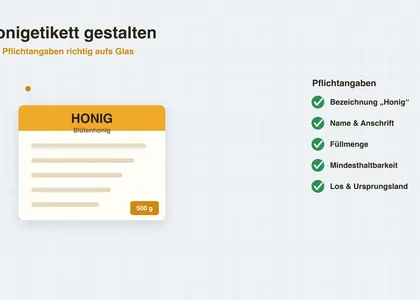
Designing a honey label correctly: all mandatory details step by step
The label is your honey's business card — and strictly regulated. We go through all mandatory details step by step, show an example and the most comm…
What you will find here
The articles in this section follow the beekeeping year. They answer questions that come round every season and rest on what holds up in practice rather than on what reads well.
By season
Spring. The first inspection decides which colonies get away – and most of it can be read without opening the hive. From April, swarm control follows on a nine-day cycle.
Summer. After the harvest comes varroa treatment: timing formic acid, extracting summer honey and preventing robbing as the flow dries up.
Late summer and autumn. Feeding and wintering settle how the colony comes into spring.
Winter. In the broodless colony it is time for the oxalic acid treatment – the last chance to bring the mite load down before spring.
Rules and records
Anyone selling honey records their treatments. What that means in practice, and what has had to go on the label since June 2026 under the new origin labelling, is covered in separate articles. The exact obligations depend on the country you keep bees in.
Calculate instead of guess
Several topics come with free calculators: the varroa indicator projects a mite drop onto the colony, the water content calculator places your refractometer reading, and the winter feed calculator tells you how much sugar you need.