
Beekeeping knowledge
The summer forage gap: causes and what you can do about it
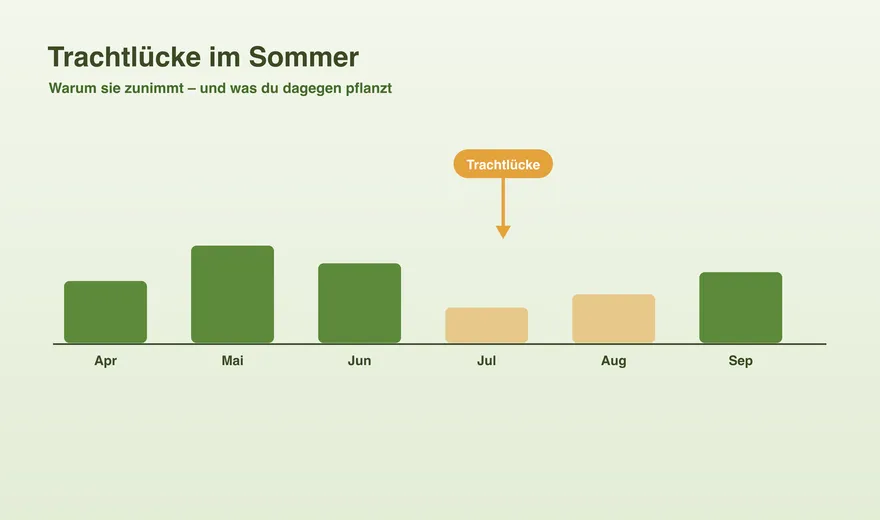
In high summer it often suddenly goes quiet at the entrance: the spring flow is over, the next one not yet here. This forage gap stresses the bees — and grows larger with climate change. We explain the causes and what you can do about it.
There is a treacherous phase in the bee year: after the lush spring and early-summer flow, a time often follows in which suddenly hardly anything blooms. This forage gap in high summer is a real burden for the colonies — and it tends to grow larger with climate change. Let us look at the causes and countermeasures.
Why the forage gap arises
The main reason is a shift in bloom times. Warmer springs make many plants bloom earlier — and partly at the same time. When fruit blossom and rapeseed fall into the same short window, it ends all the faster afterwards. After the summer solstice, the forage supply declines sharply in many regions, and the tidy, species-poor agricultural landscape often offers little to follow.
Why it stresses the bees
This moment is especially delicate, because in late summer the colony raises the valuable winter bees — and they need plenty of pollen. If the supply is missing, the colony has to live off its reserves. If these run short, it comes under stress, the brood is reduced and the winter bees turn out weaker. A forage gap thus has effects reaching into winter.
What you can do about it
As a beekeeper you have several levers:
- Offer forage plants: deliberately plant late-summer bloomers in the garden and surroundings. The late-summer gap can be closed well with goldenrod, asters and stonecrop (Sedum); the earlier "June gap" with raspberry, viper's bugloss and comfrey.
- Migrate: if possible, move your colonies to a region with a late flow — for example near blooming sunflowers, limes or forest honeydew.
- Keep an eye on stores: during the gap, check the feed and, if necessary, help weak colonies with a small ration so the brood does not collapse.
A topic for non-beekeepers too
Bee-friendly planting is not only a matter for beekeepers. Anyone who plants late-blooming, unfilled flowers in the garden, on the balcony or at the field edge helps honey bees and wild bees alike through the lean time. Many small areas together make a large forage supply.
Conclusion
The summer forage gap is a growing challenge — but one you can actively counter. With the right late-summer bloomers, some foresight in site selection and an eye on the feed stores, you bring your colonies well through the barren time.
Document inspections without thinking about it
Record date, product, amount and the treated colonies right at the apiary. The basis for your treatment records builds itself as you go.
Start for freeFrequently Asked Questions
What is a forage gap?
A phase in high summer in which hardly anything blooms after the spring flow. The bees then find little nectar and pollen and have to live off their reserves.
Which plants close the summer forage gap?
In late summer, goldenrod, asters and stonecrop (Sedum) are suitable. The earlier June gap can be eased with raspberry, viper's bugloss and comfrey.
Why is the forage gap dangerous?
Because the winter bees, which need a lot of pollen, are raised in late summer. Without forage, the brood suffers and the winter bees turn out weaker — with effects into winter.
 Organic cotton beekeeper T-shirt “The Dance Language”