
Beekeeping knowledge
Documenting the honey harvest: batches and traceability
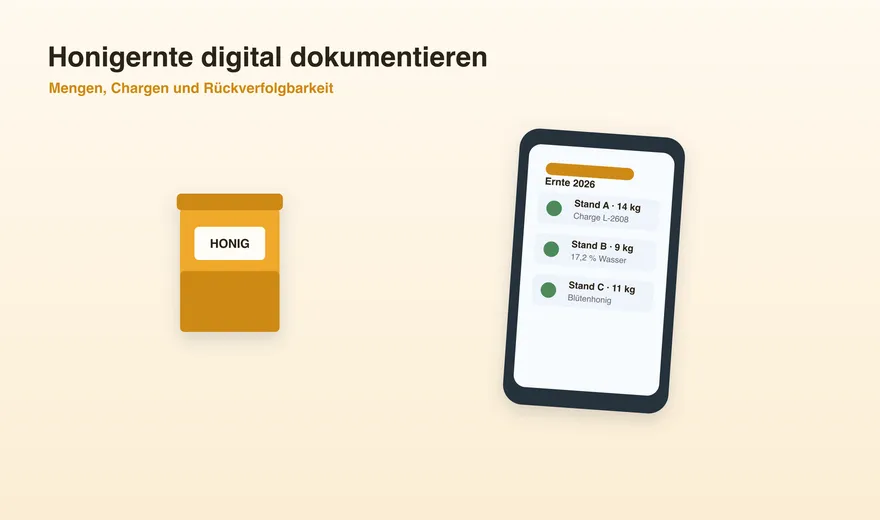
After extracting comes documenting: anyone who sells honey must record their harvest traceably. We show what belongs to traceability and how to cleanly manage harvest amounts, batches and quality data digitally.
The honey harvest is the finest moment of the bee year — but bottling is not the end of it. Anyone who sells honey is legally obliged to ensure traceability. That sounds bureaucratic, but with the right documentation it is quickly done — and protects you in an emergency. We show what matters.
Why documentation is mandatory
Food law requires that every sold batch can be traced back. Should there ever be a complaint, you must be able to prove which harvest a jar comes from. This is exactly what the lot/batch number on the label is for — and the associated record of which batch was created when and from which honey.
What you should record
For clean harvest documentation, these details belong together:
- Harvest amount per colony or site and date.
- Batch number and into which jars it was bottled.
- Water content — important for quality and shelf life.
- Variety and origin (site, region).
- The best-before date you derive from it.
Why digital scores especially here
On loose notes such documentation is quickly lost. Recorded digitally, by contrast, it is findable at any time, searchable and linked to the respective hive record. You see at a glance which colony brought how much, which batch went where and what water content was measured. That not only fulfils traceability but also helps you recognise your best colonies and sites.
From record to label
The nice side effect of good harvest documentation: all the details you need for the label — amount, batch, best-before date, origin — you already have together. That turns the obligation into a practical step that makes labelling easier.
Conclusion
Traceability need not be an annoying obligation. Whoever records their honey harvest digitally right at extraction has batches, quality and origin under control at any time — legally sound and as a by-product. That is exactly what a management app with a harvest feature is made for.
Document inspections without having to think about it
You record the date, product, amount and the treated colonies right at the apiary. The basis for your medicine record book builds up as you go.
Start for freeFrequently asked questions
Why do I have to document my honey harvest?
Because food law requires traceability: every sold batch must be assignable to a harvest. The batch number on the label plus the associated record serve this purpose.
What belongs in the harvest documentation?
Harvest amount and date, batch number and the jars, water content, variety and origin, and the best-before date derived from it.
What does digital harvest documentation offer?
It is findable at any time, linked to the hive record and directly provides all the details for the label. As a by-product it shows you which colonies and sites bring the most honey.
 Organic cotton beekeeper T-shirt “The Dance Language”