
Beekeeping knowledge
Colony inspection: documenting every check cleanly
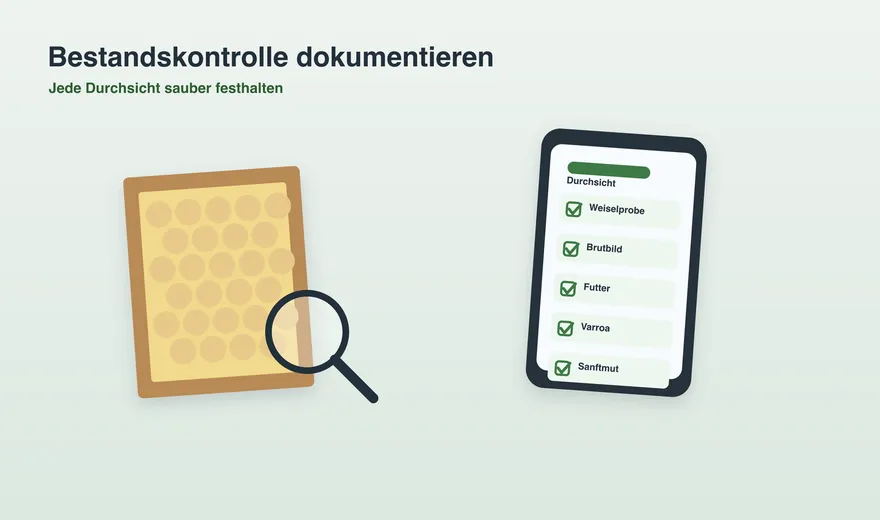
An inspection without a note is half an inspection. Whoever records the key points at every check manages their colonies more purposefully and spots problems earlier. We show what belongs to colony inspection and how to document it sensibly.
An experienced beekeeper recognises in a few minutes how a colony is doing. But even the best eye is of little use if the observation is not recorded. Colony inspection — the documented check — is the backbone of good colony management. It helps you recognise developments, plan tasks and learn from every season.
What you check at every inspection
These points belong to the basic check of a colony:
- Queen status: is the queen present and laying? Eggs and a closed brood nest are good signs.
- Brood pattern: is the brood even and healthy, or are there gaps and abnormalities?
- Feed store: is there enough feed until the next check?
- Varroa load: how do the mites stand (board, powdered sugar)?
- Colony strength and temperament: how strongly does the colony sit, how calmly does it behave?
Why recording is so important
The value of documentation shows over time. A single note becomes a trend: you see whether a colony stays gentle, how the honey yield develops, when the queen weakens or how fast varroa rises. This information is the basis for targeted decisions — such as which queen is suitable for breeding or which colony you had better unite.
From note to planning
Good documentation is not only a review but also planning. If you note at the inspection "expand next week" or "check varroa", you have your to-dos ready at the next visit. Digitally this can be linked with reminders, so no important task is missed.
Obligation and bonus in one
A pleasant side effect: whoever documents anyway also fulfils the required record of veterinary medicines (the treatment record) at the same time. Note the treatment, done — the mandatory documentation runs along the way while you manage your colonies.
Conclusion
Every inspection is a chance to understand your colony better — but only if you record the observation. Whether on paper or digitally: consistent colony inspection makes you a better beekeeper. The easiest and clearest way is with a digital hive record.
Document inspections without having to think about it
You record the date, product, amount and the treated colonies right at the apiary. The basis for your medicine record book builds up as you go.
Start for freeFrequently asked questions
What should I document at every inspection?
Queen status, brood pattern, feed store, varroa load as well as colony strength and temperament. Plus upcoming tasks as a note for the next visit.
Why is colony inspection so important?
Because single notes become a trend over time. It shows the development, yield and health of each colony and is the basis for targeted decisions and breeding selection.
Does inspection documentation fulfil the treatment record obligation?
Yes, if you also record the treatments with veterinary medicines completely and traceably. Then the mandatory documentation runs along the way.
 Organic cotton beekeeper T-shirt “The Dance Language”