
Beekeeping knowledge
Beekeeping in climate change: challenges and adaptation
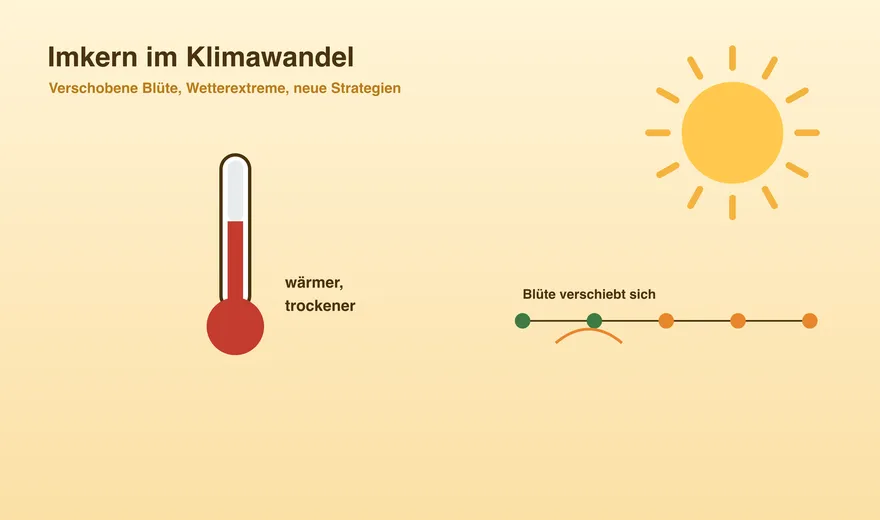
Warmer winters, shifted bloom times, drought and heavy rain: climate change is noticeably transforming beekeeping. We show which challenges are coming for beekeepers — and how you adapt your colony management.
Climate change has long since arrived at the apiary. Anyone who has kept bees for a few years feels it: the season starts earlier, the weather becomes less predictable, and old rules of thumb no longer fit everywhere. For beekeeping this brings challenges — but also the need to become more flexible. We give an overview.
Shifted and compressed bloom times
Perhaps the clearest change: milder springs make many forage plants bloom earlier — and often at the same time. When fruit blossom and rapeseed coincide, there is a short, intense burst of forage, followed by an all the earlier forage gap. The flow becomes more irregular and harder to plan.
Weather extremes
Drought, heatwaves and heavy rain are increasing. Drought makes flowers produce less nectar, heat stresses the colonies, and long rainy spells keep the bees from flying. For us beekeepers this means: we have to factor the weather forecast more strongly into our planning — for example when choosing the treatment time or migrating.
Longer season, new rhythms
Milder winters and an earlier spring lengthen the bee season. Colonies sometimes brood longer into autumn and start earlier in the year. This also shifts the varroa dynamic: a longer brood phase means more reproductive cycles for the mite. Consistent monitoring and flexibly adapted treatment times become all the more important.
How you adapt
- Flexible rather than by the calendar: orient yourself more by the actual state of the colonies and the weather than by rigid dates.
- Secure forage: promote late-blooming bee forage and observe when the gaps occur in your region.
- Keep an eye on varroa: check the mite load more often and be ready to adapt the treatment to the brood cycle.
- Water and shade: at hot sites, provide shade and a water source.
Conclusion
Climate change does not make beekeeping impossible, but more demanding. Whoever observes attentively, reacts flexibly and documents their colonies well can adapt. Good records help especially here: over the years they show you how forage, development and treatment are shifting in your region.
Document inspections without having to think about it
You record the date, product, amount and the treated colonies right at the apiary. The basis for your medicine record book builds up as you go.
Start for freeFrequently asked questions
How is climate change changing beekeeping?
Through shifted and compressed bloom times, more weather extremes and a longer bee season. That makes forage and varroa dynamics harder to plan and calls for more flexible colony management.
What does the longer season mean for varroa?
A longer brood phase means more reproductive cycles for the mite. That is why more frequent monitoring and flexibly adapted treatment times become more important.
How can I adapt as a beekeeper?
Orient yourself by the actual state of the colonies and the weather rather than the calendar, promote late-blooming forage, check varroa more often and provide water and shade at hot sites.
 Organic cotton beekeeper T-shirt “The Dance Language”