
Beekeeping knowledge
The Tropilaelaps mite: the next varroa?
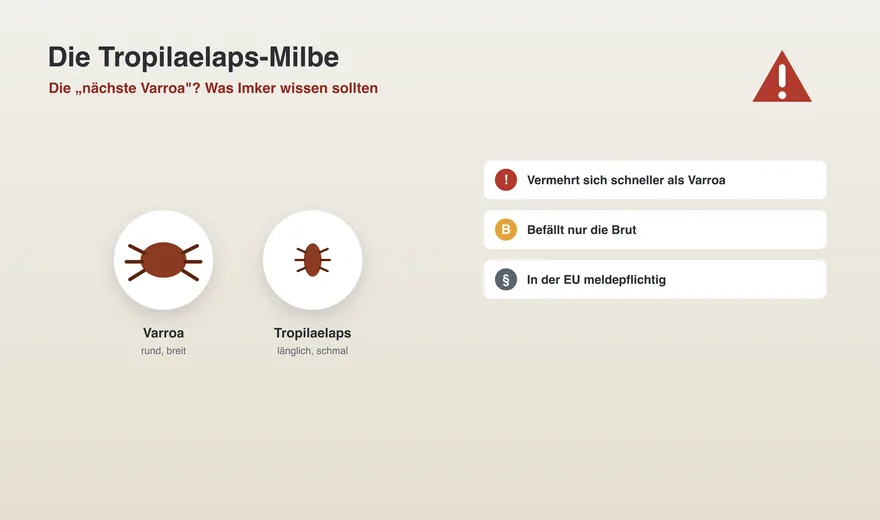
No sooner have we halfway got the varroa mite under control than the next threat announces itself: the Tropilaelaps mite. It is considered potentially even more dangerous. We explain what defines it, how it differs from varroa and what beekeepers should know now.
The varroa mite has fundamentally changed beekeeping since it arrived around 50 years ago. Now the next challenge may be at the door: the Tropilaelaps mite (mainly Tropilaelaps mercedesae). Experts consider it a potentially even greater danger than varroa. High time to become familiar with it — before it arrives.
What is the Tropilaelaps mite?
Originally the Tropilaelaps mite comes from Asia, where it parasitises giant honey bees. Like the varroa once did, it has jumped to our Western honey bee. In 2024 it was detected in the Krasnodar region of western Russia — geographically already close to Europe. Through international trade and migratory beekeeping, its spread can accelerate.
The decisive difference from varroa
A remarkable difference concerns its way of life: unlike the varroa mite, the Tropilaelaps mite cannot survive permanently on adult bees. Its mouthparts cannot pierce the chitin armour of adult bees — it depends on the brood. That may sound like an advantage at first, but it has a downside.
Why it is so dangerous
Because the Tropilaelaps mite multiplies much faster than varroa. It has a very short reproductive cycle and spreads rapidly from colony to colony. An infestation can therefore grow explosively and severely damage a colony in a short time. Because it lives exclusively in the brood, some methods aimed at adult mites also work differently — control poses new questions for beekeepers.
Reporting obligation: what beekeepers must know
The Tropilaelaps mite is classified in the EU as a notifiable bee disease. If you suspect or detect an infestation, you are obliged to report it immediately to the responsible veterinary office. Just as with American foulbrood, quick reporting is the most effective protection for the whole region.
What you can do now
The Tropilaelaps mite has not yet arrived widely in Central Europe. The most important thing is therefore to be attentive. During mite-drop checks, watch for unusual, elongated mites that differ from the round varroa, and keep informed about your bee institute's recommendations. Whoever knows the threat recognises it early in an emergency — and that can be decisive.
Source
Profile and assessments of the Friedrich Loeffler Institute (FLI) and specialist articles in bienen&natur on the Tropilaelaps mite.
Document inspections without thinking about it
Record date, product, amount and the treated colonies right at the apiary. The basis for your treatment records builds itself as you go.
Start for freeFrequently Asked Questions
What is the Tropilaelaps mite?
A parasitic mite from Asia that — like the varroa once did — has jumped to the Western honey bee. In 2024 it was detected in western Russia and is considered potentially even more dangerous than varroa.
How does Tropilaelaps differ from varroa?
Tropilaelaps cannot live permanently on adult bees and depends on the brood. In return it multiplies much faster and spreads more quickly.
Is the Tropilaelaps mite notifiable?
Yes. In the EU it is classified as a notifiable bee disease. On suspicion or detection you must inform the veterinary office immediately.
 Organic cotton beekeeper T-shirt “The Dance Language”