
Beekeeping knowledge
Preventing robbing: protecting your colonies in late summer
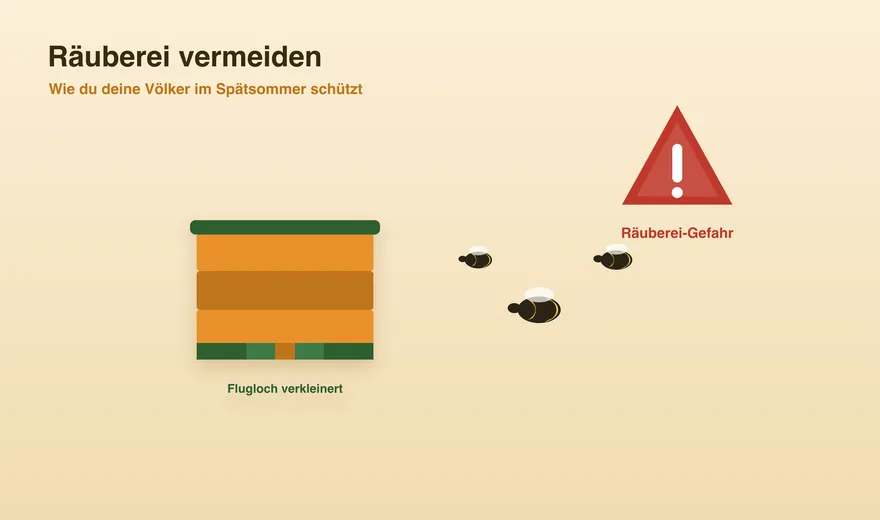
When the flow dries up, the apiary becomes dangerous: robbing can destroy whole colonies in late summer. We show how it arises, how to prevent it reliably and what to do once it has started.
Late summer is a critical time at the apiary. The flow is largely over, the colonies are searching for food – and that is exactly when peaceful foragers can turn into a robbing gang. Robbing is one of the underestimated risks of the season: it can plunder a colony in a few hours and, in the worst case, destroy it. With the right behaviour, however, it can almost always be avoided.
What is robbing – and why is it so dangerous?
Robbing is when bees from other colonies invade a hive to steal its food stores. Above all, weak colonies that cannot defend their entrance are affected. Once robbing is underway, it develops a dangerous momentum: more and more robbers are attracted, the raided colony loses its stores and often its queen. On top of that, diseases such as foulbrood are carried from apiary to apiary.
When does robbing threaten?
The risk rises as soon as the natural forage declines – typically from late July. Warm, forage-less days are especially dangerous. Beekeeping interventions can also trigger robbing: open feeding, spilled syrup, hives left open too long during inspection or honey combs lying around. The scent of honey and sugar water is like an invitation for searching bees.
How to prevent it reliably
The good news: with a few simple rules you can get the problem well under control.
- Narrow the entrance: weak colonies in particular defend a small entrance much more easily. Insert an entrance reducer in good time.
- Feed in the evening: give the winter feed late in the evening when flight activity has stopped. By morning the syrup is taken up and no longer attracts anyone.
- Do not spill: spill no syrup or honey at the apiary and leave no combs or feed buckets standing open.
- Work quickly and closed: do not keep hives open longer than necessary during inspection, especially on forage-less days.
- Tight hives: make sure the hives have no extra cracks or holes through which robbers can enter.
Recognising and stopping robbing
You can recognise robbing by hectic, undirected flight in front of the entrance, by fighting bees on the landing board and by bees searching the hive at the cracks. If you react immediately, you can often still save the colony: reduce the entrance drastically (in an emergency down to the passage for one or two bees), thereby reducing the area to be defended. A damp cloth over the hive or temporarily covering the entrance with loose grass can additionally interrupt the robbing. In severe cases, moving the affected colony to another location for one or two days helps.
Strong colonies are the best protection
In the end, the most effective prevention is a healthy, strong colony with a young queen. Weak colonies should either be strengthened deliberately in late summer or united with another colony. That way you deny robbing its preferred victims from the start.
Document inspections without having to think about it
You record the date, product, amount and the treated colonies right at the apiary. The basis for your medicine record book builds up as you go.
Start for freeFrequently asked questions
What causes robbing in bees?
Above all, declining forage in late summer combined with weak colonies and mistakes such as open feeding or spilled syrup. The scent of feed attracts foreign bees.
How can I prevent robbing?
Narrow the entrance, feed only in the evening, do not spill, do not keep hives open long during inspection and ensure tight hives. Strong colonies defend themselves best.
What should I do if robbing has already started?
Reduce the entrance drastically at once, and if necessary move the colony to another location briefly. A damp cloth or loose grass in front of the entrance can interrupt the robbing.
 Organic cotton beekeeper T-shirt “The Dance Language”