
Beekeeping knowledge
Designing a honey label correctly: all mandatory details step by step
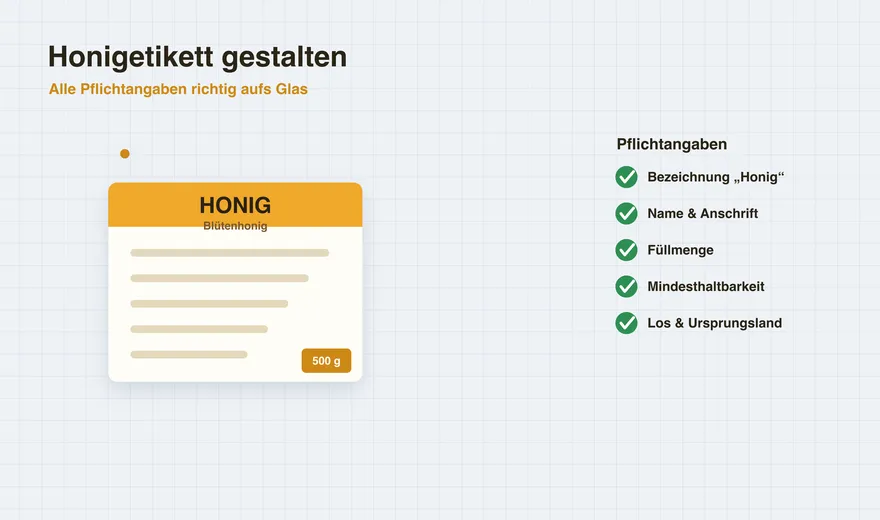
The label is your honey's business card — and strictly regulated. We go through all mandatory details step by step, show an example and the most common mistakes so your jar is legally sound.
A nice label sells — but above all it must be correct. For honey, the German Honey Regulation and the Food Information Regulation (LMIV) apply, and they precisely specify what belongs on the jar. The good news: there are a manageable number of details, and once you understand them, you can design any label to be legally sound. We go through them in turn.
The mandatory details at a glance
- The name "honey": the sales name, with the variety if needed ("blossom honey", "lime honey") or extraction method. You must be able to substantiate variety claims.
- Name and address: of you as the beekeeper or the responsible person — a proper address, not just a PO box.
- Net quantity: in grams or kilograms, e.g. "500 g".
- Best-before date: "best before …". Two years is common for honey.
- Lot/batch number: for traceability. It may be dropped if the best-before date includes the day — with the usual month indication you need it.
- Country of origin: in which the honey was produced.
An example to take away
A correct label could look like this: "Honey – blossom honey", below it "Mustermann Apiary, Musterstraße 1, 12345 Musterstadt", "500 g", "best before 08/2028", "Lot L-2608", "Country of origin: Germany". Your own single-origin honey needs no more than that. A nutrition table is not required for honey, as it is an unprocessed product.
Blended honey: with percentages since June 2026
Important for anyone mixing honeys from different countries: since 14 June 2026, blended honey must list all countries of origin with their percentage share, in descending order and clearly visible. The former collective statements such as "blend of EU and non-EU honeys" are no longer permitted. For your single-origin German honey, nothing changes.
Avoiding typical mistakes
The most common pitfalls are quickly named: font that is too small or hard to read, details hidden by the lid or seal, a missing or wrongly placed country of origin and fancy names without proof. Also make sure the label sticks firmly to the jar and does not fall off in damp conditions.
Tip: create a template and document
Set up a label template into which you only enter the best-before date and lot number per batch. That way you forget nothing and save time. Which batch is in which jar is best recorded in your digital hive record — that also fulfils the required traceability.
Document inspections without thinking about it
Record date, product, amount and the treated colonies right at the apiary. The basis for your treatment records builds itself as you go.
Start for freeFrequently Asked Questions
What details must appear on a honey label?
The name "honey", the beekeeper's name and address, net quantity, best-before date, lot/batch number and country of origin. For blended honey, additionally all countries of origin with their percentage.
Do I need a nutrition table on the honey jar?
No. Honey is an unprocessed product and exempt from the nutrition labelling requirement.
May the lot number be dropped?
Yes, if the best-before date includes the day. With the month-and-year indication common for honey, you need a lot number.
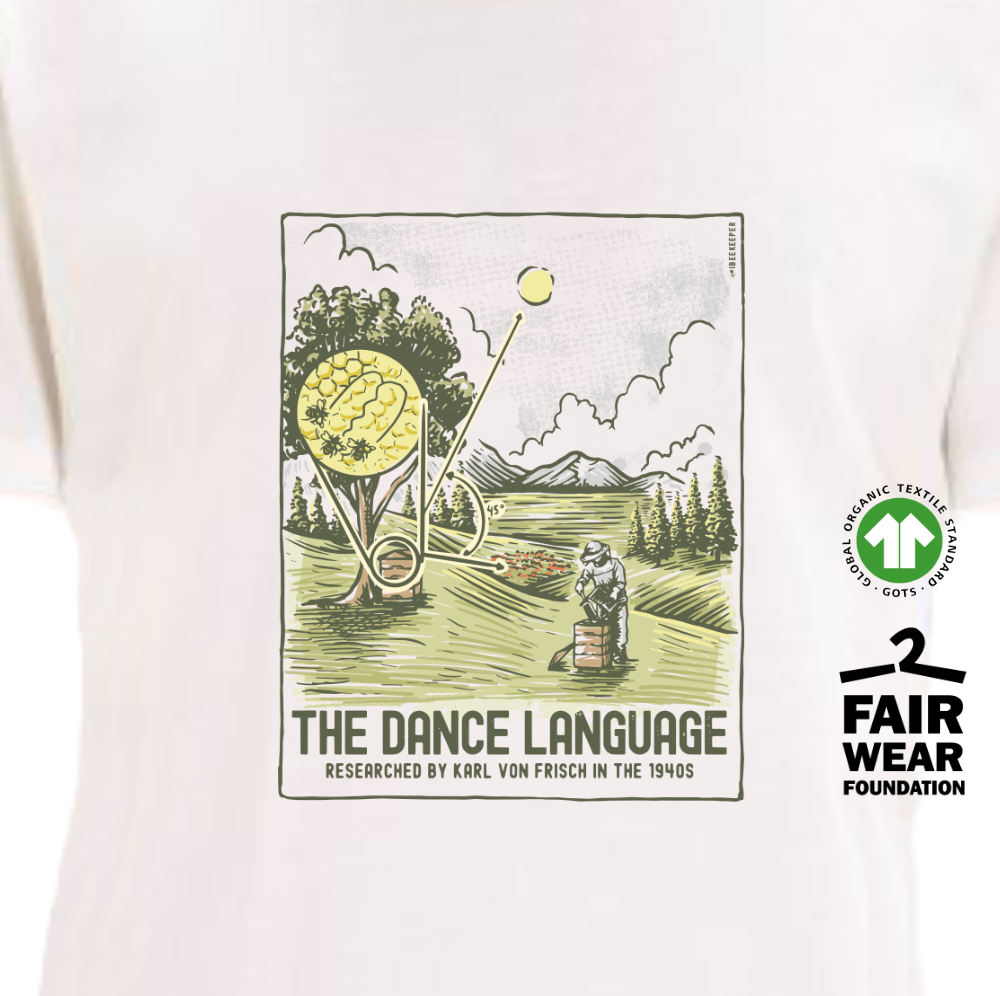 Organic cotton beekeeper T-shirt “The Dance Language”