
Beekeeping knowledge
Buying bees: nucleus, package or full colony?
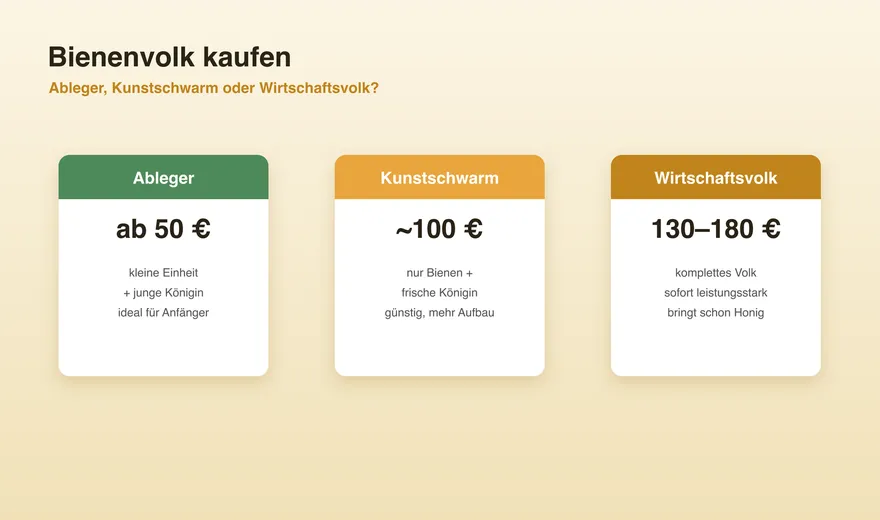
The path to your first own colony leads through an important decision: a nucleus, a package or straight away a complete full colony? We explain the differences, what they cost and what you must watch out for when buying.
At some point the time comes: you want to buy your first own bee colony. But "a colony" does not simply exist as one thing — there are different forms that differ in price, effort and suitability for beginners. We present the three most common ones and tell you what matters when buying.
The nucleus — ideal for beginners
A nucleus (nuc) is a small, young colony. The beekeeper forms it by taking two to five brood combs from a full colony and giving it a — usually young — queen. Over the summer the nuc grows into a full colony. For beginners it is the best choice: with its young queen it does not swarm in the first year, and at first you only have to expand, feed and treat it against varroa. Prices usually start from around 50 €.
The package — cheap, but with building up
For a package, worker bees are swept from the combs into a transport box and combined with a freshly mated queen. So you basically get only bees and a queen — without combs, without a hive. That makes the package the cheapest variant (often around 100 €), but also the most demanding: the swarm first has to build all its comb from scratch. A package does have a health advantage, though, because it starts without old, potentially contaminated combs.
The full colony — ready to go immediately
A full colony is a complete, productive colony with a queen, many workers, brood and feed combs — and the associated hive. It is ready to use immediately and, depending on the season, brings honey even in the first year. In return it is more expensive and somewhat more demanding for absolute beginners, because you have to manage a large colony straight away. Prices for single-box colonies are usually 100–130 €, double-box 130–180 € — with a complete hive correspondingly more.
What you must watch out for when buying
- Health certificate: always ask to see a current health certificate. It confirms that a bee inspector has examined the colony and that it is free of American foulbrood.
- Young queen: a queen from the previous year is more productive and less prone to swarming than an older one.
- Matching frame size: make sure the combs fit your hive — not every size is compatible with every other.
- Buy locally: a colony from the region is used to the climate, and the short transport is gentler. You often find reputable sellers through your beekeeping association.
Conclusion
For most beginners the nucleus is the best choice: cheap, easy to care for and with a young queen. Anyone who wants to harvest honey faster and trusts themselves to manage a large colony reaches for the full colony. And whatever you decide — do not buy any colony without a health certificate and a matching frame size.
Document inspections without having to think about it
You record the date, product, amount and the treated colonies right at the apiary. The basis for your medicine record book builds up as you go.
Start for freeFrequently asked questions
What is the difference between a nucleus, a package and a full colony?
The nucleus is a small young colony with a few brood combs and a young queen. The package consists only of bees and a queen without combs. The full colony is a complete, immediately productive colony with a hive.
Which colony is suitable for beginners?
Usually the nucleus: it is cheap, does not swarm in the first year with its young queen and only has to be expanded, fed and treated.
What should I watch out for when buying a colony?
A current health certificate (free of foulbrood), a young queen and a frame size that fits your hive. Buy locally where possible, ideally through the beekeeping association.
 Organic cotton beekeeper T-shirt “The Dance Language”