
Beekeeping knowledge
Recognising American foulbrood and acting correctly
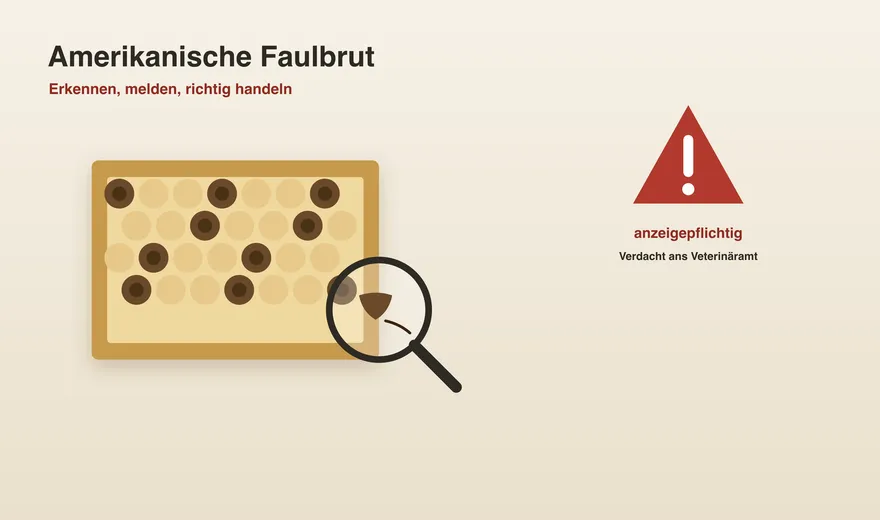
American foulbrood is one of the most feared bee diseases – and notifiable. We show how to recognise it early, why even the suspicion must be reported and how the remediation of an infected colony works.
American foulbrood (AFB) is one of the most dangerous bee diseases of all – it can destroy entire colonies and apiaries. The cause is the bacterium Paenibacillus larvae, which infects the bee larvae. The real problem is its extremely resistant spores: they survive for decades in old combs, in honey and on equipment. That makes it all the more important to recognise the disease early and react correctly. Note up front: AFB is harmless to humans and to eating honey.
How to recognise American foulbrood
AFB shows in the capped brood nest. Typical warning signs are sunken, perforated and dark cell cappings – the brood pattern looks irregular and patchy. If you open an affected cell, you find, instead of a healthy larva, a milky-coffee-coloured, slimy mass. The classic test is the matchstick test: if you stir in the cell with a matchstick and pull it out slowly, the mass can be drawn into a thread several centimetres long – a very clear indication of AFB.
Only a laboratory test brings certainty. If you suspect it, send a feed rim sample to a suitable laboratory, which detects the spores. Many beekeeping associations and bee institutes regularly organise such tests as a precaution.
Duty to report: even the suspicion counts
American foulbrood is a notifiable animal disease. That means: you must inform the responsible veterinary office already on suspicion – not only on a confirmed diagnosis. This is not harassment but the most effective protection for all beekeepers in the vicinity, because only this way can a spread be stopped.
Restricted zone and remediation
If the laboratory confirms foulbrood, the authority usually sets up a restricted zone with a radius of about three kilometres. Within this zone, no colonies, wax or equipment may be moved or taken out. All apiaries in the zone are examined.
Colonies are killed today only if they are no longer capable of remediation. The method of choice is the artificial swarm procedure: you sweep all bees from the combs into an empty hive; the old combs are melted down immediately. A short starvation phase of two to three days follows, during which the bees use up their spore-laden food stores. The artificial swarm then goes into a disinfected hive with fresh foundation. This way the bees are preserved while the spore source is eliminated. Remediation always takes place in consultation with the veterinary office or the bee inspector.
Prevention is better than remediation
The best protection is consistent hygiene: use fresh foundation regularly, renew old comb, buy bees and equipment only from a trustworthy source and never feed foreign honey. A regular feed rim sample through the association gives additional certainty. Anyone who looks closely at the brood combs during every inspection recognises abnormalities early – and the earlier, the better the chances for the colonies in the vicinity.
Source
Guideline for controlling American foulbrood in Germany; information from the Bavarian State Institute for Viticulture and Horticulture (LWG) and the veterinary offices.
Document inspections without thinking about it
Record date, product, amount and the treated colonies right at the apiary. The basis for your treatment records builds itself as you go.
Start for freeFrequently Asked Questions
How do I recognise American foulbrood?
By sunken, perforated cell cappings and a milky-coffee-coloured, slimy mass in the cells. In the matchstick test it can be drawn into a thread. Only a feed rim sample in the laboratory brings certainty.
Do I have to report foulbrood?
Yes. AFB is notifiable – you must inform the responsible veterinary office already on suspicion, not only on a confirmed diagnosis.
Does an infected colony have to be killed?
Not necessarily. Colonies capable of remediation are usually saved via the artificial swarm procedure: sweep the bees, melt down old combs, short starvation phase, then into a disinfected hive with fresh foundation – always in consultation with the veterinary office.
 Organic cotton beekeeper T-shirt “The Dance Language”