
Beekeeping knowledge
Digital hive record vs. paper: what is worth it for beekeepers?
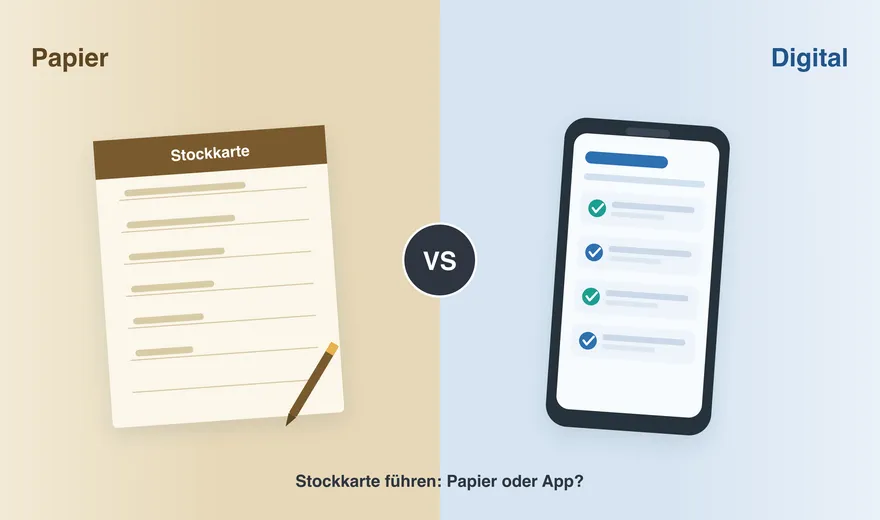
Hive record on paper or in an app? Both work – but they differ clearly in effort, overview and analysis. We compare strengths and weaknesses honestly and tell you which apiary benefits from what.
Whether inspection, queen status, varroa level, treatment or harvest – anyone who really wants to keep track of their colonies keeps a hive record. It is the memory of your apiary: what did you see when, do what, plan what? And for veterinary medicines, documentation – the treatment record – is legally required anyway. So the question is not whether, but how: paper or app?
The paper hive record: unbeatably simple – up to a point
The card on the colony has great charm: it is there instantly, needs no battery and no app. Pen out, note it down, done. Especially for beginners with one or two colonies in the garden, that is perfectly sufficient and pleasantly uncomplicated.
The weaknesses show over time – and with the number of colonies. Cards get wet at the apiary, fade in the sun or disappear. If you want to evaluate one colony over several years or compare all colonies, leafing through quickly becomes tedious. Anyone keeping bees at several sites carries their papers back and forth or keeps them twice. And the most important point: there is no backup. If the card is lost, the data is gone for good.
The digital hive record: overview, analysis and a safety net
It is exactly at these weaknesses that an app plays to its strengths. The most important advantages at a glance:
- Always with you and searchable: all colonies and sites in your pocket, you find any old entry in seconds.
- Analysis at the touch of a button: gentleness, honey yield, swarming tendency, varroa trend or the queen's age can be compared over time – the basis for targeted breeding and site selection.
- Reminders: the app lets you know when treatment, feeding or a check is due.
- Cloud backup: if you lose your phone, your data is still safe.
- Multiple sites and teams: neatly organised, even when several people work on the same colonies.
The drawbacks are manageable and honestly named: you need a smartphone with a charged battery, and learning it takes a few inspections to get used to. Anyone who really does not want to type at the apiary can also add entries later on the computer.
And data protection?
You hardly need to worry about the GDPR with the hive record. Site, colony number, queen year, treatment – these are operational data about your bees, practically no personal data. Only when you store customer data (for honey sales, say) does the topic become relevant, and that is a different matter.
What is legally allowed?
Both. The documentation of treatments with veterinary medicines – the treatment record – may be kept on paper or digitally. What matters is that it is complete, traceable and secured over the retention period. A good app meets exactly these requirements and handles the mandatory documentation along the way, while you enter your inspection anyway.
Conclusion: it depends on the size
For one or two colonies in the garden, paper is perfectly fine – nothing speaks against it. But as soon as it becomes more colonies, several sites or the wish for real analysis, the digital hive record clearly plays to its advantages: less lost data, less paper chaos, more overview. That is exactly what we built the iBeekeeper management app for – with hive records, stock control, harvests and analysis in one app. Trying it costs nothing, and the switch often succeeds within a single season.
Document inspections without thinking about it
Record date, product, amount and the treated colonies right at the apiary. The basis for your treatment records builds itself as you go.
Start for freeFrequently Asked Questions
Is a hive record on paper still allowed?
Yes. The documentation may be kept on paper or digitally – what matters is that it is complete, traceable and retained.
What are the advantages of a digital hive record?
All colonies searchable and always with you, analyses at the touch of a button, reminders for tasks, cloud backup and easy organisation of several sites.
Does an app fulfil the mandatory treatment record for veterinary medicines?
Yes, provided the app records treatments completely and traceably and the data is retained. The mandatory documentation then runs along the way.
 Organic cotton beekeeper T-shirt “The Dance Language”