
Beekeeping knowledge
Managing bee colonies across multiple sites
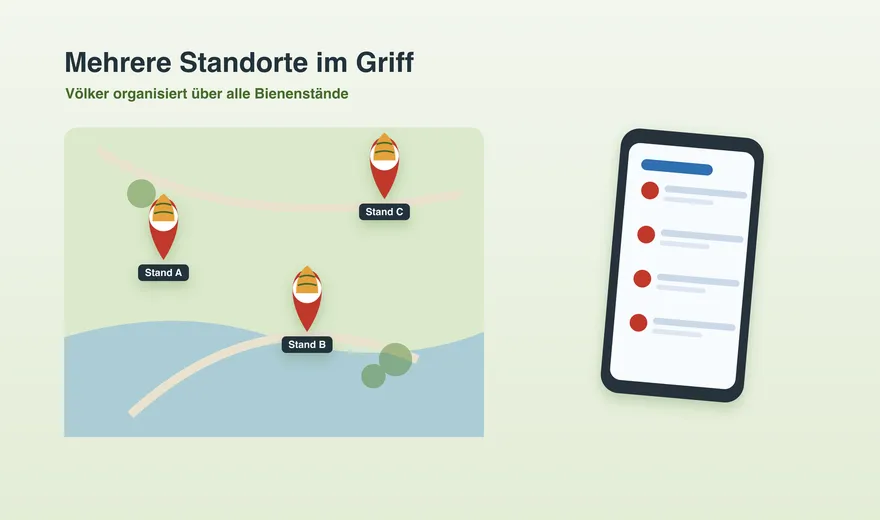
Two colonies in the garden are quickly in view — but with several sites it gets confusing. We show how to organise colonies and sites cleanly so you keep the overview even as your apiary grows.
At the start there is the one colony in the garden. But beekeeping grows quickly: a second site at the forest edge, a third at a farmer friend's, plus a few nucs. What still works in your head with a few colonies quickly becomes confusing with several sites — and mistakes creep in. With the right organisation, however, your apiary stays manageable even as it grows.
Why several sites make sense
Distributed sites have tangible advantages: you use different forage, spread the risk (diseases, vandalism, forage failure) and do not overload any site with too many colonies. The price is a higher organisational effort — and that is exactly what needs to be tamed.
The typical challenges
Anyone keeping bees at several sites knows the problems: which colony is where? When were you last at site C? Which colonies have already been treated, which not? On paper this quickly leads to paper chaos and double bookkeeping. And when you are at the site, you may lack exactly the note you made at home.
Keeping the overview with site groups
The solution is a clear structure: combine your colonies into site groups. Each site forms a group, each colony a unique number. That way you see at a glance what is where and what happened last. Also practical are:
- Unique colony numbers that you also attach to the hive lid.
- A site status that shows you where tasks (treatment, feeding, checking) are still open.
- Notes and photos per colony that you call up directly at the site.
Why digital scores especially here
It is exactly with several sites that a digital management app plays to its strength. All sites and colonies are bundled in one app, available at any time — no matter which site you are at. You immediately see which colonies still need treating, plan your trips more efficiently and have the complete history of each colony with you. If you work in a team, everyone accesses the same data, without anything being done twice or not at all.
Conclusion
Several sites are no reason to lose the overview — on the contrary: with clean site groups, unique colony numbers and digital documentation, you keep even a growing apiary calmly under control. That is exactly what we built the iBeekeeper management app for.
Document inspections without thinking about it
Record date, product, amount and the treated colonies right at the apiary. The basis for your treatment records builds itself as you go.
Start for freeFrequently Asked Questions
How do I organise colonies at several sites?
Combine the colonies of each site into a site group, assign unique colony numbers and document tasks per site. That way you keep track of what is due where.
What are the advantages of several apiaries?
You use different forage, spread risks such as disease or forage failure and do not overload any site. The price is a higher organisational effort.
Why is an app worth it with several sites?
Because all sites and colonies are bundled and available at any time — including the status of open tasks and the complete history, also in a team.
 Organic cotton beekeeper T-shirt “The Dance Language”